
Shipping hazardous materials (Hazmat) requires strict adherence to regulations designed to protect transportation networks, personnel, and the public. Both the United States Postal Service and United Parcel Service enforce detailed policies governing how these materials must be declared, labeled, and transported. Failure to comply is not a minor oversight—it can result in financial penalties, shipment rejection, or suspension of shipping privileges.
This article provides a unified overview of USPS and UPS Hazmat requirements, highlights the most common compliance failures, and presents the most effective solution available through Rollo Ship.
- Understanding Hazardous Materials in Shipping
- USPS Hazmat Requirements
- UPS Hazmat Requirements
- The Most Common Hazmat Violations
- The Simplest and Most Reliable Solution
Understanding Hazardous Materials in Shipping
Hazardous materials include items such as lithium batteries, flammable liquids, aerosols, and other regulated goods that may pose a risk during transport. These materials are classified and labeled using internationally recognized systems, including UN identification numbers like UN3481, commonly associated with lithium-ion batteries.
A critical factor in Hazmat shipping is transport mode. Many hazardous materials are prohibited from air transport due to the elevated risk of fire or explosion at altitude. As a result, both USPS and UPS rely on labeling systems and embedded data within shipping barcodes to ensure that such packages are routed exclusively through ground transportation networks.
USPS Hazmat Requirements
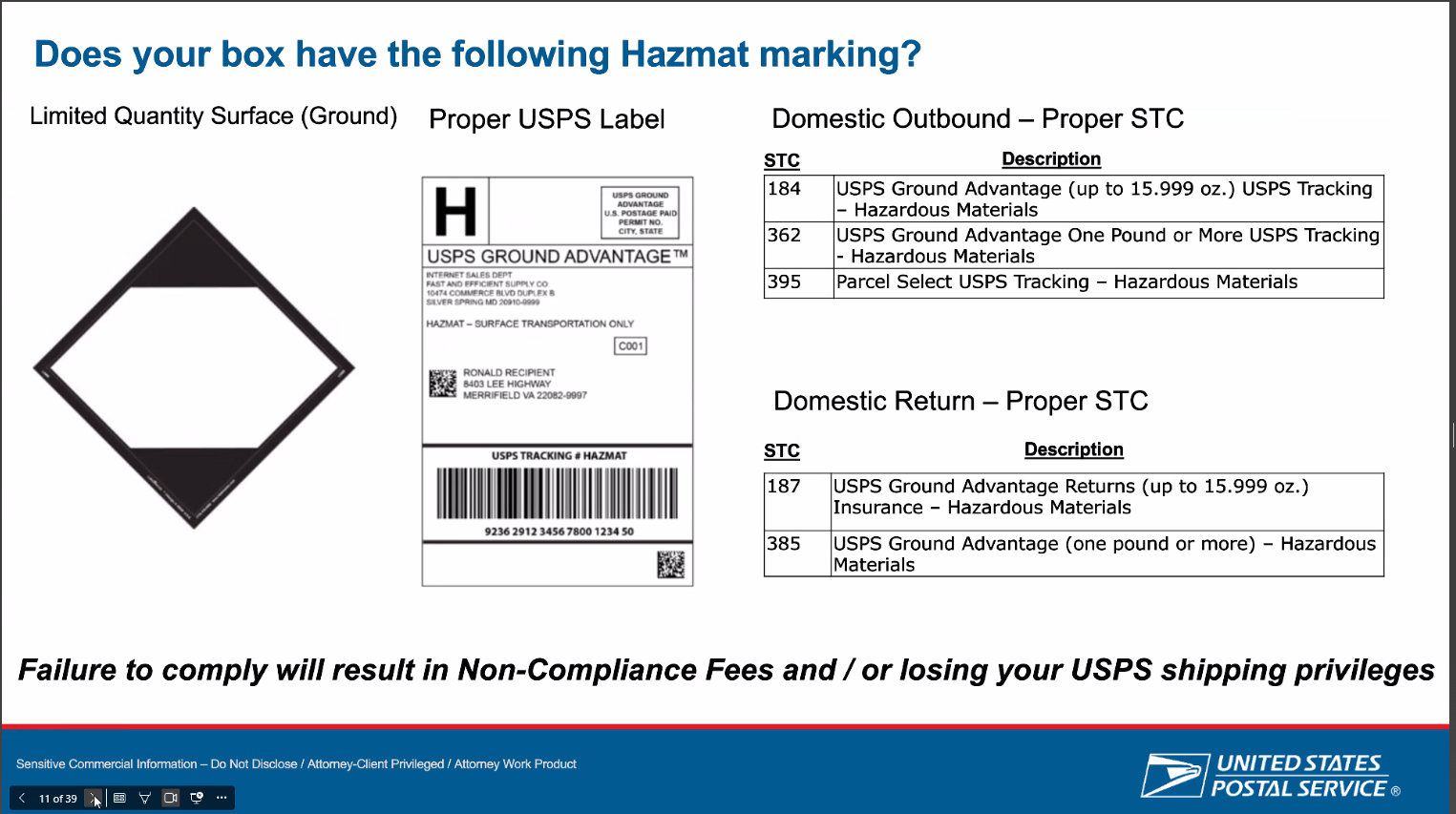
The USPS mandates that all hazardous materials be clearly declared and properly labeled. Any package displaying a Hazmat marking—such as the UN3481 lithium battery label or the Limited Quantity diamond—must be treated as a regulated shipment.
A compliant USPS Hazmat package requires three essential elements:
- Visible Hazmat Marking
The package must display the appropriate symbol indicating the presence of hazardous materials. - Correct Shipping Label
USPS requires the use of a Ground Advantage label marked with an “H”, which signifies that the shipment contains hazardous materials and must be transported via surface methods only. - Embedded Service Type Code (STC)
The shipping label must include a specific Service Type Code within the barcode. This code enables USPS automated systems to identify the package as Hazmat and prevent it from entering air transportation channels.
Common STCs for USPS Hazmat shipments include:
- 184 – Ground Advantage (up to 15.999 oz)
- 362 – Ground Advantage (one pound or more)
- 395 – Parcel Select (Hazmat)
These codes are not optional—they are essential for proper routing and compliance.
Packages with this symbol  MUST BE DECLARED AS HAZMAT and must have the (H) USPS Ground Advantage label. This mail does NOT fly and can not be sent priority. It is ground service only, through the STC and accounts for over 50% of infractions.
Packages with this label 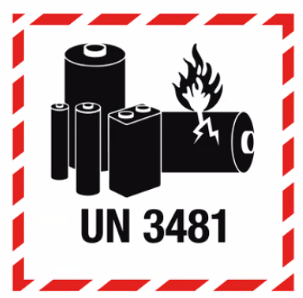 MUST BE DECLARED AS HAZMAT! You can only use these service type codes listed in the image below. Improper labeling of these types of packages accounts for approximately 26% of infractions.
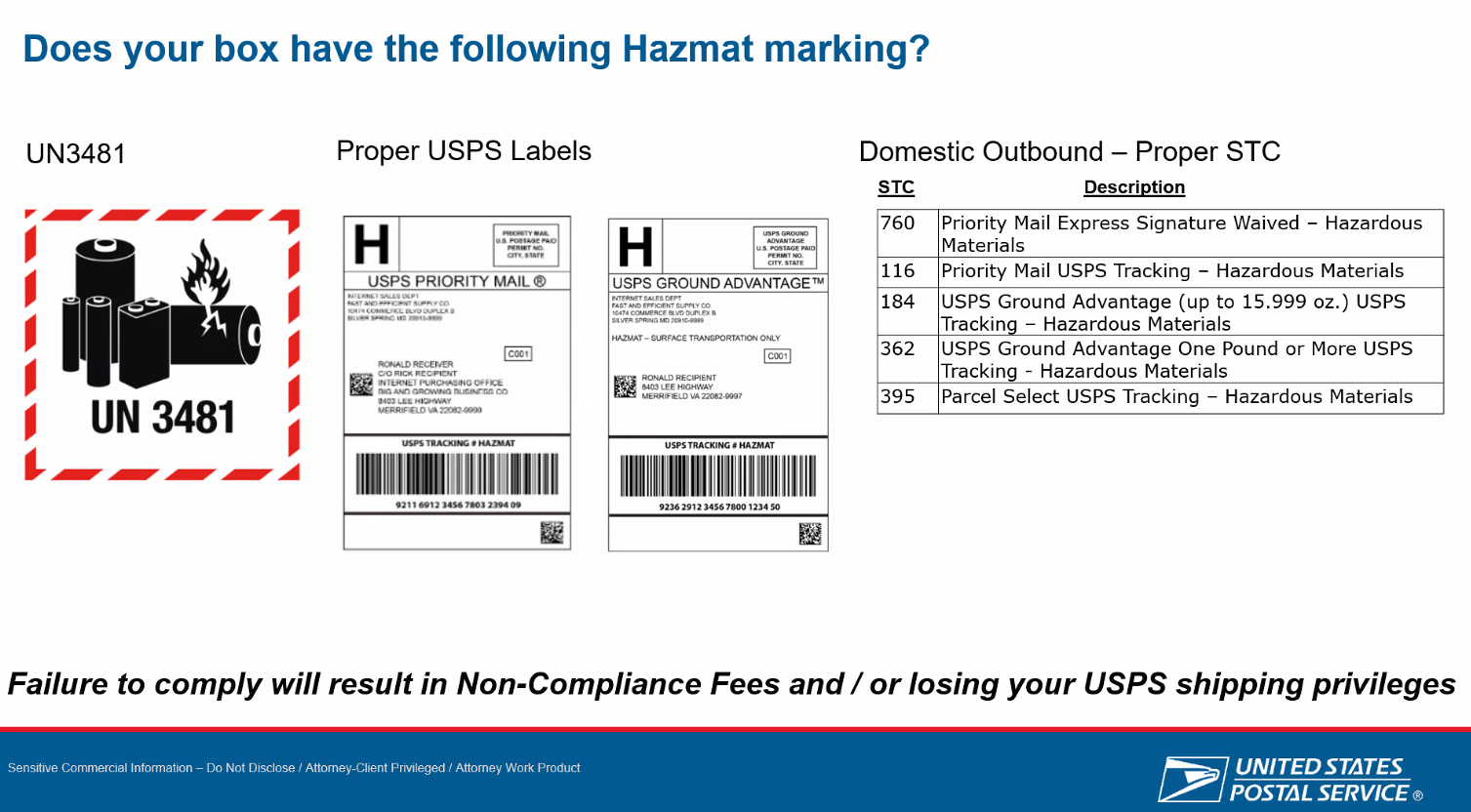
USPS Hazardous Materials Guide
UPS Hazmat Requirements
UPS operates a more formalized hazardous materials program that requires prior approval before a shipper can send regulated goods. Businesses must undergo certification, maintain proper documentation, and ensure staff are trained in Hazmat handling procedures.
UPS requires:
- Proper classification of materials, including UN/NA number, hazard class, and packing group
- Use of approved packaging that meets Department of Transportation (DOT) standards
- Accurate hazard labeling that corresponds to the contents
- Shipping documentation, including declarations and, where required, safety data
Like USPS, UPS enforces strict separation between air and ground transport. Many hazardous materials are restricted to ground services, and failure to comply with these rules can result in severe penalties or account suspension.
The Most Common Hazmat Violations
Despite clear guidelines, two recurring compliance failures account for the majority of Hazmat-related issues.
1. Undeclared Hazmat Shipments
This occurs when a package displays a Hazmat marking—such as a lithium battery label—but is shipped using a standard, non-Hazmat service. This is the most frequent violation, responsible for over half of all compliance issues.
The risk in this scenario is significant. Automated sorting systems may treat the package as safe and route it through air transportation, where hazardous materials pose a much greater danger.
2. Improper Labeling or Packaging Mismatch
The second major category of violations involves inconsistencies between packaging and labeling.
One common example is the reuse of a Hazmat-labeled box for a non-hazardous shipment without removing or covering the marking. This creates confusion in sorting systems and may trigger unnecessary compliance actions.
Another frequent issue occurs when a shipment is correctly packaged as Hazmat but lacks the proper Service Type Code in the shipping label. In this case, the shipper selected a standard shipping option instead of a Hazmat-designated service, resulting in a mismatch that prevents proper routing.
The Simplest and Most Reliable Solution
Ensuring full compliance with Hazmat shipping requirements can be complex when handled manually. However, this complexity can be significantly reduced by using the built-in Hazmat functionality within Rollo Ship.
When the Hazmat option is selected in Rollo Ship, the system automatically:
- Generates the correct USPS Ground Advantage “H” label
- Embeds the appropriate Service Type Code (STC) into the tracking barcode
- Ensures the shipment is designated for ground-only transport
- Aligns the label with the Hazmat markings on the package
This removes the risk of human error and ensures that shipments comply with USPS requirements from the moment the label is created.
Hazardous materials shipping is governed by strict regulations that rely on both visible labeling and embedded data to ensure safety. USPS and UPS share a common objective: preventing dangerous goods from entering inappropriate transport channels, particularly air networks.
The most frequent compliance failures—undeclared Hazmat shipments and improper labeling—are avoidable with the right processes in place. By leveraging automated solutions such as the Hazmat shipping option in Rollo Ship, businesses can ensure consistent compliance, reduce operational risk, and maintain uninterrupted access to carrier services.
In Hazmat shipping, accuracy is not just important—it is essential.